3 Big Reasons Why US Water Bills Are So High Right Now
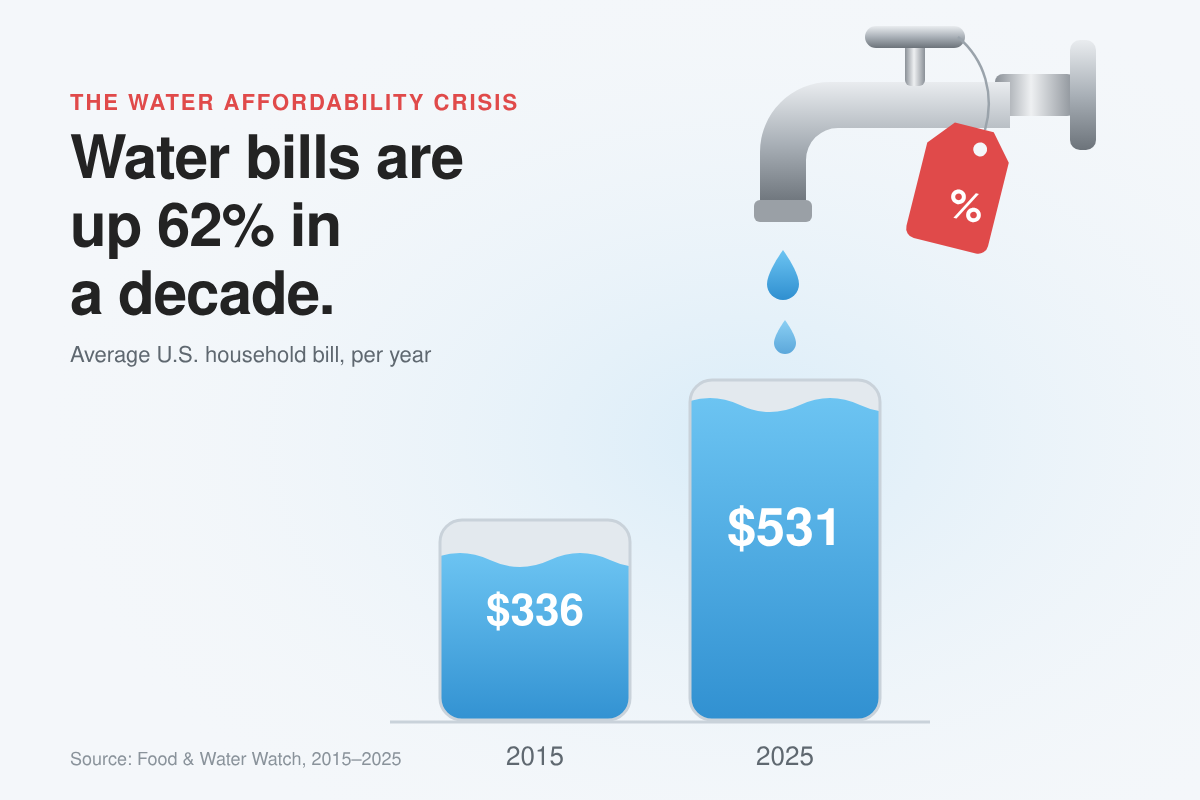
If you’re paying significantly more for water at home than a decade ago, you’re certainly not alone. Residential water bills rose 62% on average across the United States between 2015 and 2025, outpacing overall inflation and median household income growth. That’s according to a Food & Water Watch analysis of billing data from 500 of the largest community water systems nationwide, which serve a combined 155 million people.
The rapid surge in water costs has reportedly become a major financial strain for many US households and has left many wondering: What caused prices to spike? Where are water bills the highest, and what can be done to make water more affordable for US households?
What Caused US Household Water Bills to Rise?
The report attributed rising water costs in the US to a mix of factors, with each varying in impact from state to state:
Corporate Control of Drinking Water Systems
Over the decade, corporate water rates increased by an average of 67%, versus 62% for public systems. In 2025, privately owned utilities charged $823 per year on average, while publicly owned utilities charged $494, which was less than water corporations charged in 2015 ($501). Unlike government-run systems, privately owned water utilities operate for profit and have a duty to generate returns for shareholders. They also often face higher capital expenses, financing costs, and tax and regulatory compliance costs, some or all of which are passed on to ratepayers through higher water bills.
Federal Underinvestment in the Country’s Aging Water Infrastructure
Much of America’s water infrastructure is aging and in desperate need of repair or replacement. Utilities have had to bear a greater financial burden to modernize and maintain these critical water systems as federal financial support fell from 63% in 1977 to 9% in 2017. Less federal investments forced utilities to rely on rate increases to fund infrastructure improvement, the analysis explains.
Climate Change
Utilities have also increased water rates to help prepare for natural disasters and extreme weather, such as droughts, floods, and wildfires. These weather events have become more frequent, severe, and unpredictable due to climate change, so it’s crucial that water systems can withstand them and timely repairs can be made when necessary. Restoration and resilience projects can include reinforcing facilities, upgrading treatment processes, and securing alternative water sources.
How Much Have Water Bills Increased Nationwide?
Nationally, US water systems charged households an average of $531 per year in 2025, which is $195 more than the $336 they typically charged in 2015. The 25 most expensive systems increased bills by an average of $637 over the same period, a 124% rate hike. The 25 least expensive systems increased bills by $58, or 44%. For individual states, New Hampshire (177%), Oregon (114%), and West Virginia (95%) saw the highest average rate increases.
Note: These charges are based on 60,000 gallons of water consumption per year, the study’s standardized estimate of indoor household water use. They exclude wastewater and stormwater charges.
Which States Had the Highest Water Bills?
West Virginia had the highest average annual water bills of all the states represented in the survey. Its two largest systems charged households an average of $1,383 per year in 2025. California also faced high water costs, as it accounted for 13 of the 25 most expensive water providers surveyed. Other states with particularly expensive water bills included Pennsylvania, Oregon, and Illinois.
What Do Rising Water Prices Mean for Consumers?
The rising cost of water in the US is a particular concern for low-income families, who spend a larger share of their earnings on water than wealthier households do. No federal law guarantees affordable drinking water service in the US, and assistance programs vary by utility and jurisdiction. When households cannot pay all or part of their bills, they may face extra late fees or water shutoffs. Without running water at home, basic daily tasks like cooking, washing dishes, showering, and flushing toilets become more challenging. In some instances, they may lose their property “because a water shutoff makes it uninhabitable or because of a water lien that leads to displacement from the home,” National Consumer Law Center (NCLC) notes.
Related: Is Access to Clean Drinking Water a Constitutional Right?
Will US Household Water Bills Keep Rising?
Water bills are likely to continue rising as utilities try to keep up with infrastructure costs without additional federal support. The Environmental Protection Agency (EPA) estimates that drinking water systems will need $625 billion in improvements over the next 20 years. Food & Water Watch warns that climate-driven droughts and severe weather are expected to continue to “threaten water supplies and infrastructure globally, generating expenses that will be pushed onto ratepayers.” Data center construction and expansion, compounded by intense water use by large industries, are also expected to drive up water costs, the nonprofit added.
Learn more: 3 Ways Data Center Water Usage Is Impacting Drinking Water Quality | How Climate-Fueled Storms & Floods Affect Drinking Water
What Can Governments Do to Make Drinking Water More Affordable for US Households?
Food & Water Watch calls on local and state governments to keep water systems under public control by banning privatization, repealing laws that encourage it, and returning corporate-owned systems to public ownership. It also urges governments to stop using water bills to subsidize large billionaire-controlled industries and to hold polluters accountable for contaminating drinking water.
At the federal level, the nonprofit recommends that Congress reject cuts to safe and clean water programs, restore funding to address the nation’s water affordability crisis, and fully fund safe drinking water in every community. It specifically supports legislation such as the WATER Act, which would create a federal trust fund to help communities meet drinking water quality standards.
What Can Households Do to Lower Drinking Water Bills?
While individual households cannot control utility rates, they can take steps to manage their water consumption and cost:
- Use less water: This can include taking shorter showers, running full loads of dishes and laundry, reducing lawn watering, and turning off taps when not in use. WaterSense-labeled products like showerheads and faucets use at least 20 percent less water than standard models.
- Check for and repair leaks: Inspect your home’s plumbing and fixtures for leaks and arrange repairs ASAP. Leak detection systems like the Flo Smart Water Monitor & Shutoff can catch leaks early and switch off your home’s water to help prevent water damage and higher water bills.
- Explore bill assistance if needed: Ask your utility about budget billing, payment plans, or low-income assistance programs to help make payments more affordable.
Bear in mind, however, that these steps can help households manage costs, but they do not address the broader factors driving up water utility rates.
Learn more: 10 Thoughtful Ways to Conserve Water Outside Your Home
Final Thoughts
Rising water bills have become a growing financial burden for many US households. While measures like conserving water at home and repairing leaks can help reduce individual water use, they cannot fully offset the broader forces behind the higher rates. Without stronger public investment, more effective affordability protections, and careful oversight of utility rates, water service may become increasingly unaffordable for many low-income households.