3 Ways Data Centers Water Usage Is Impacting Drinking Water Quality
One of the biggest concerns about America’s data center boom is the amount of water these facilities consume. A single large-scale data center can guzzle up to 5 million gallons of water per day, roughly as much as a city of 50,000 people. While this is a serious problem regarding data centers, another critical yet less-discussed issue is the potential contamination of local drinking water from their construction and operations.
With more and more data centers popping up across the country, it is important to highlight their effects on drinking water quality and how nearby residents can safeguard their water supplies.
What are Data Centers and What’s Driving Their Rapid Expansion in the U.S.?
Nearly every website visit, digital content stream, or prompt to a generative artificial intelligence (AI) tool relies on a data center: “a physical room, building or facility that houses IT infrastructure for building, running and delivering applications and services,” according to International Business Machines (IBM). These data warehouses can take many forms, from small on-site server rooms to remote campuses the size of dozens or hundreds of football fields.
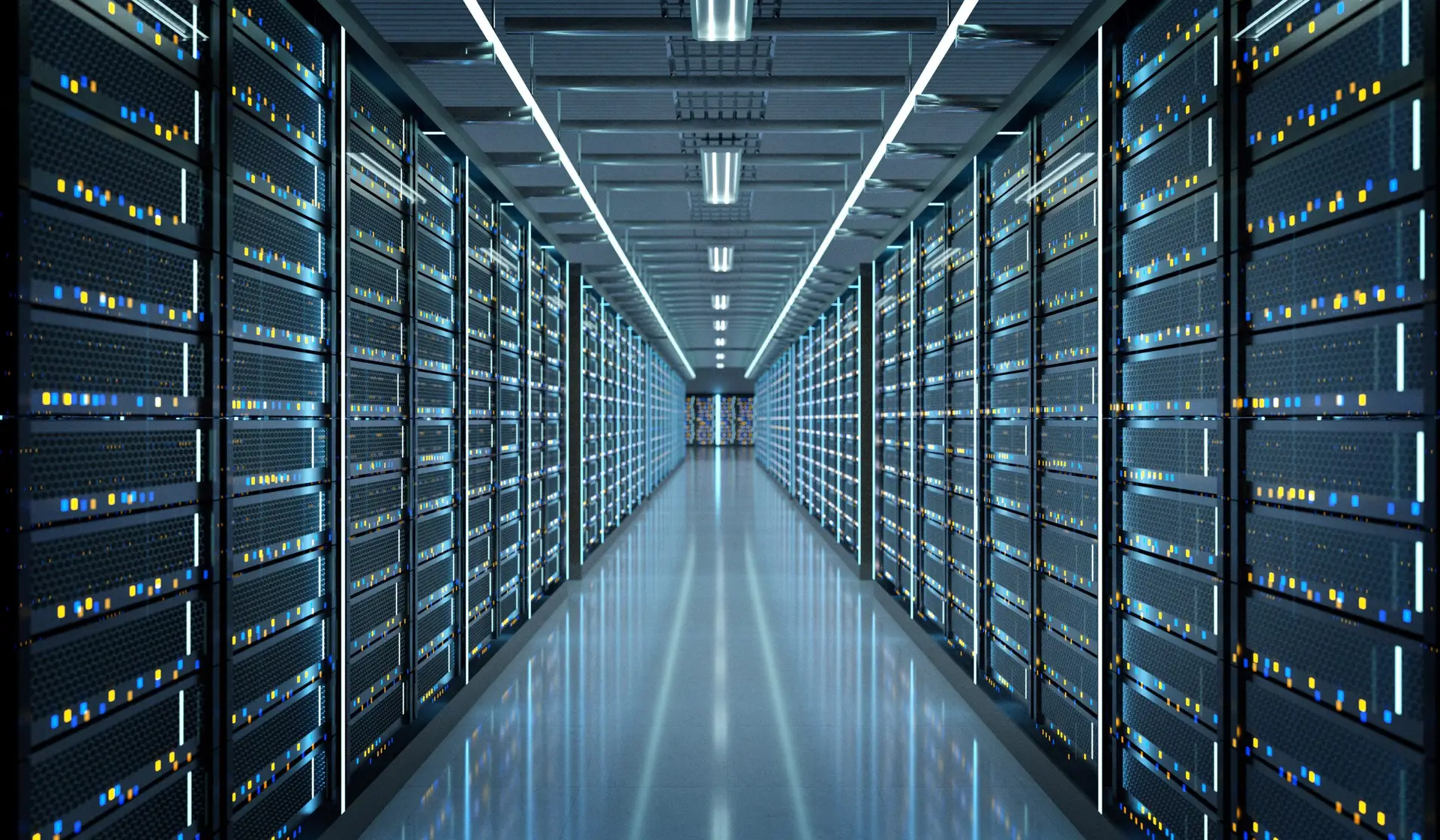
Within most data centers are rows of computer servers, processors, storage devices, networking equipment, and supporting systems for cooling, power backup, fire suppression, and security. These systems work together to process the world’s digital traffic and serve as the backbone of the modern digital infrastructure.
Behind the Rapid Growth of U.S. Data Centers
Data centers are not new. They have been around since the 1940s and expanded during the 1990s with the rise of the internet. But today, they are growing at a much larger scale and faster pace, primarily driven by the surging demand for AI technology, according to the American Association for the Advancement of Science (AAAS). State tax breaks and huge capital investments in data centers also play a part.
The U.S. hosts more than 3,000 data centers, mostly in Virginia, Texas, and California, with 1,500 more planned or under construction, according to data from the Pew Research Center. But while these industrial data megafarms might be necessary for modern life, their expanding presence poses a threat to drinking water quality in local communities.
How Can Data Centers Pollute Local Drinking Water Supplies?
In a nationwide poll by the U.S. Water Alliance, 69% of respondents said they are concerned about the effect data centers will have on water quality in their area, up from 54% in 2021. But how exactly can data centers degrade drinking water quality?
-
Sediment Runoff from Data Center Construction Sites
Large-scale data center construction often involves explosive blasting, drilling, grading, and other activities that may disturb the surrounding soil and release large amounts of sediment into surrounding water sources. During heavy rainfall, for instance, runoff can pick up loose soil particles and site debris and carry them into rivers, streams, and other nearby waterways. That tainted water may also soak into aquifers that supply drinking water to private wells. In one rural North Georgia community, residents reported that their well water appeared discolored or “muddy” due to a buildup of sediment, supposedly from a large data center development nearby.
-
Increased Nitrate Contamination in Groundwater
Data centers operating in agricultural regions may also worsen nitrate contamination in local groundwater. A recent example of this is the “supercharged” water crisis in eastern Oregon: Amazon’s data centers reportedly cooled their servers with groundwater laden with nitrates from fertilizers. When that tainted water cycled through the facility’s cooling system, some of the water evaporated, but the nitrates remained, further elevating the chemicals’ concentration in the liquid. The wastewater, which occasionally had nitrate levels up to eight times Oregon’s safety limits, was applied to nearby farm fields. This is said to have contributed to nitrate contamination in groundwater used by well users in the area, leading to a class-action lawsuit and a multimillion‑dollar settlement.
Read more: 5 Reasons to Avoid Nitrates in Drinking Water | High Levels of Nitrates Found in Tap Water for 1 in 5 Americans
-
Chemical Discharge from Data Center Cooling Systems
Data centers typically use a variety of chemicals to cool their rows of server stacks. Among these chemical coolants are PFAS (per- and polyfluoroalkyl substances), widely known for their water-repellant and heat-resistant properties. The Guardian reports that these “forever chemicals” are usually added to water used in data center immersion-cooling systems, in which electronic components are submerged in a chemical fluid that absorbs heat from the hardware. PFAS may also leach into cooling water from internal components like semiconductors. In data center cooling systems that aren’t “closed loop,” improperly treated wastewater expelled from the system may contain elevated amounts of PFAS. This PFAS-laden water may then be discharged to ground and surface waters, water treatment plants, or municipal sewer systems.
Some data center operators may also introduce other potentially hazardous chemicals to cooling water to reduce the risk of clogged pipes, corrosion, mineral buildup, and bacterial growth. Examples include fluorinated gases (F-gases) like hydrofluoroolefins (HFOs) and hydrochlorofluoroolefins (HCFOs), ethylene glycol, and corrosion inhibitors, such as nitrites, molybdates, borates, azoles, phosphates, polymers, and descalers. Like PFAS, wastewater containing these chemicals may also end up in the surrounding environment and ultimately in drinking water sources.
Learn more about what PFAS are, their health risks, and how to lower your exposure.
What Regulations are in Place to Curb the Effects Of Data Centers On Local Water Supplies?
While there is currently no single federal framework governing water pollution from data centers in the U.S., these facilities are still regulated under general environmental laws. For example, the Clean Water Act (Section 402) requires data centers to obtain permits for discharging pollutants into water and sets discharge limits and monitoring requirements. Also, an AI Data Center Moratorium Act was introduced in March 2026 to pause the construction of AI data centers “until strong national safeguards are in place” to curb the harmful environmental effects of their construction and operation, among other things. Furthermore, at least 14 states are considering temporarily banning new data center developments to give officials more time to study their impacts on local communities.
How to Find Out if Your Drinking Water is Contaminated
Whether or not you live near a data center, you may wonder if your home’s water supply may be contaminated, especially if the water appears cloudy or murky. Luckily, there are ways to find out if that’s the case:
-
Read your local water quality report.
If your water comes from a public utility, try to obtain a copy of your most recent Consumer Confidence Report (CCR), also known as a water quality report. You may find it by searching your water provider’s website, using the EPA’s CCR lookup tool, or calling your water utility and requesting that one be emailed or mailed to you. If you rent, ask your landlord or property manager, or request the CCR from your utility company. Municipalities are required to issue CCRs to customers by around July 1 of each year. These reports list the contaminants detected in a utility’s water, along with their concentrations and other details.
Learn how to read your local water quality report.
-
Check EWG’s database for water contamination in your area.
The EWG maintains a searchable Tap Water Database that shows which contaminants government testing has found in an area’s drinking water, based on a specific zip code or state. Importantly, it tells you whether the contaminants are under the EPA limit and whether they’re under the more stringent threshold that EWG’s scientists consider safe. You can also use an interactive data center map to see if there are any planned, under construction, or operating facilities near you.
-
Test your drinking water.
Finally, if your water comes from a private source, consider purchasing a mail-in Well Water Test Kit and having your water tested by an EPA-certified laboratory. Certified laboratory testing generally checks for the presence and concentrations of potentially harmful pollutants in your water, such as PFAS, pesticides, radon, nitrates, bacteria, and heavy metals. It can also measure important water chemistry parameters, such as pH and Total Dissolved Solids (TDS).
Discover 10 common problems a water test can detect in tap water.
What You Can Do Right Now to Protect Your Home’s Water Supply
One of the easiest and most effective ways to protect against potentially harmful water pollutants is to use a home water filtration system certified to remove contaminants such as lead, PFAS, nitrates, and various heavy metals. Common options include under-sink water filters and whole-house water systems.
Under-Sink Drinking Water Filtration
Some under-sink systems filter water using reverse osmosis (RO), which involves forcing water through a semipermeable membrane to remove a wide range of contaminants. For example, Moen’s Advanced Under-Sink RO Water Filter System is NSF-certified to reduce toxic contaminants, including PFAS, pharmaceuticals, chlorine, arsenic, fluoride, viruses, lead, and mercury, in your cold water. Its carbon filtration stage improves the water’s taste, odor, and clarity. Plus, its high recovery RO membrane significantly reduces water waste.
Whole-House Drinking Water Filtration
If you also want cleaner, higher-quality water flowing to your showerheads, bathroom faucets, water-using appliances, and other water household water outlets, it’s worth considering a whole-house system. Installed at the home’s main water line, these point-of-entry systems treat every drop of water flowing into your household. The SpringWell Whole-House Well Water Filter System, in particular, is designed to remove various contaminants, including iron, hydrogen sulfide, and manganese. If bacteria in your water are also a concern, you can consider adding a Chemical Injection System or UV Water Purification System, or a specialized PFAS Water Filter System to combat “forever chemicals.”
Learn whether a whole-house water filtration system is right for you and how to install it yourself, step by step.
Final Thoughts
As data centers multiply across the U.S., so does the threat to drinking water quality from their development and operation. Sediment runoff, increased nitrate contamination, and chemical discharge can make local drinking water unsafe to use and consume. The good news is, you can protect your home’s water supply from potential contamination. For starters, have your water tested by a certified laboratory, then consider purchasing a suitable water treatment system designed to remove or reduce detected contaminants. Also, stay informed about what’s happening in your community and advocate for local transparency and regulation to help ensure strong safeguards are in place as the number of data centers increases nationwide.
If you want help choosing the right water treatment system for your home, contact SpringWell at 800-589-5592, request a free water consultation call, or message us via our live chat. Our water experts will answer any questions you may have and help you choose the right system for your needs and budget.