What EPA’s 2026 PFAS OUT Initiative Means for Water Quality
Detections of PFAS (per- and polyfluoroalkyl substances) in U.S. drinking water systems have risen tremendously in recent years. So much so that at least 45% of the country’s tap water is now estimated to contain one or more of these “forever chemicals.” This widespread contamination has become a growing concern for many, particularly due to the health risks of PFAS exposure. As part of its broader efforts to tackle this issue, the Environmental Protection Agency (EPA) has announced the launch of a new initiative to help communities “proactively address PFAS in drinking water.”
Continue reading to learn what the new program entails and how it may impact your drinking water. We’ll also break down what PFAS are, how they enter drinking water systems, their potential health risks, and how to filter them from your home’s water supply.
Understanding EPA’s PFAS OUT Initiative and Why It Matters
On April 14, 2026, the EPA announced that it had introduced a first-of-its-kind program called PFAS OUTreach, or “PFAS OUT.” Here’s everything to know about this new initiative.
What is the PFAS OUT initiative, and why has the EPA launched it now?
“Protecting Americans from PFAS in drinking water is a top priority for the EPA,” declares EPA Assistant Administrator for Water Jess Kramer. And so, the agency has launched the PFAS OUTreach initiative to “help water systems accelerate actions to reduce exposure to PFOA and PFOS in drinking water.” Notably, PFOA (perfluorooctanoic acid) and PFOS (perfluorooctanesulfonate) are the two most thoroughly studied and pervasive “forever chemicals,” and their health impacts are well understood. Through the new initiative, the EPA says it will “proactively and systematically engage with public water systems, states, and partners” to address contamination from these toxic compounds before the 2031 federal compliance deadline.
What systems will benefit from PFAS OUT, and what type of assistance will they receive?
Per the announcement, the EPA aims to directly engage approximately 3,000 drinking water systems nationwide that have known challenges with PFOA and PFOS to “ensure they are aware of the support available to them.” Importantly, these water utilities have been found to have concentrations of PFOA and PFOS above the maximum contaminant level (MCL) of 4 parts per trillion (ppt). The program will prioritize smaller, rural, and disadvantaged water systems that often have fewer resources to tackle PFAS contamination on their own. However, the EPA will collaborate with water utilities of all sizes and “connect them to essential PFAS resources, tools, and opportunities for funding and technical assistance” for full compliance with enforceable drinking water standards in the coming years.
What does this mean for your drinking water?
By proactively supporting public utilities in addressing PFAS contamination, this PFAS OUT initiative could help reduce levels of PFOA, PFOS, and other “forever chemicals” in your home’s water supply. Bear in mind, however, that the program focuses on long-term planning and treatment upgrades tied to compliance deadlines that run into the 2030s. Therefore, it may take years for many communities to see noticeable reductions in PFAS levels at the tap. In the meantime, residents may consider taking steps to reduce “forever chemicals” in their drinking water by installing a certified PFAS water treatment system (more on this below).
What are PFAS?
PFAS stands for per- and polyfluoroalkyl substances, a family of human-made chemicals featuring strong and stable molecular bonds that make them incredibly durable and resistant to moisture, stains, heat, and grease. PFAS are sometimes called “forever chemicals” because that’s pretty much how long they can remain in the environment. These compounds generally don’t break down naturally, or do so very slowly. As a result, they can linger in water, soil, and the human body almost indefinitely. This incredible persistence is also why PFAS have been widely used in many products, from nonstick cookware and water-repellent clothing to stain-resistant fabrics and firefighting foams, since the 1950s.
How Do PFAS Get into Drinking Water?
PFAS-contaminated drinking water is the primary route of exposure to forever chemicals for about 20 percent of people in the U.S. But how do these toxic compounds get into household water supplies? PFAS in tap water can come from various sites, including:
- Landfills
- Industrial facilities that manufacture PFAS
- Airports and military sites that use PFAS-laden firefighting foams
- Wastewater treatment plants
- Farms where PFAS pesticides are used and biosolids/sewage sludge are applied as fertilizers
When PFAS-containing products or waste from these sources are disposed of, used, or spilled onto soil, water runoff can carry the chemicals into surface waters like lakes, rivers, and streams, many of which may supply drinking water to public water systems. In addition, PFAS can seep through soil and migrate into groundwater aquifers used as drinking water sources by public and private water systems.
PFAS Contamination Risk Differs Based on Your Water Source
It is estimated that only 8% of U.S. community water systems are equipped with filters capable of removing PFAS, leaving millions of Americans exposed to the harmful compounds. The lack of federal oversight of private wells means owners bear the burden of managing their water. Potential gaps in monitoring, testing, and treatment can increase the chances of PFAS quietly infiltrating domestic water supplies and endangering users’ health. Wells near potential PFAS sources, such as industrial or waste sites, are particularly at risk of contamination.
Learn more: 1 in 5 Americans May Have PFAS in Their Tap Water, Study Finds
What are the Human Health Impacts of PFAS Exposure?
More research is needed to determine precisely how PFAS exposure impacts human health, but the findings thus far have been troubling. Citing peer-reviewed scientific studies, the EPA states that PFAS have been shown to cause serious human health harms, including:
- Reproductive problems, such as decreased fertility or increased blood pressure during pregnancy
- Developmental effects or delays in children, including low birth weight, accelerated puberty, bone variations, or behavioral changes
- Higher risk of some cancers, including prostate, kidney, and testicular cancers
- Reduced ability of the body’s immune system to fight infections, including reduced vaccine response in children
- Interference with the body’s natural hormones
- Increases in cholesterol levels and/or risk of obesity
Health experts warn that PFAS can accumulate in fatty tissues and organs over time, so even small amounts can be concerning. Plus, according to the Centers for Disease Control and Prevention (CDC), it takes three to five years for blood levels of older PFAS chemicals like PFOS and PFOA to decrease by half once exposure stops.
Learn more about the health risks of PFAS in private well water.
How are PFAS in Water Regulated in the U.S.?
In 2024, the EPA finalized the first-ever national limits on six PFAS in drinking water. Specifically, the regulations established legally enforceable MCLs of 4 ppt each for PFOA and PFOS, and 10 ppt each for PFNA, PFHxS, HFPO-DA (commonly known as GenX chemicals). It also established limits for mixtures of certain PFAS using a Hazard Index. The rule required public water systems to monitor for the substances, report findings to customers, and take steps to reduce contamination. However, the agency has since announced plans to roll back regulations for four of those chemicals.
Learn more about EPA’s PFAS Rules Rollback.
How Can I Test My Water For PFAS?
Since “forever chemicals” have no taste, smell, or odor, you’ll need to test your drinking water to know if they are present. To do so, purchase a water test kit, collect a water sample from your tap, and send it to a certified laboratory for analysis. Home test strips generally don’t detect PFAS in water. If your home uses water from a public water system, you can look up the most recent local water quality report to gauge whether PFAS are a concern in your area. You can also check the EWG’s PFAS Contamination Map to view PFAS-contaminated locations.
Learn how to read your local water quality report and 10 common problems a water test can detect.
Best SpringWell Water Filters to Remove PFAS from Drinking Water
If a test indicates your water contains PFAS (or a map shows they’ve been detected in your area), you can limit your exposure by installing a filter that is certified for the removal of PFAS. SpringWell offers several impressive options:
Under-Sink PFAS Filtration
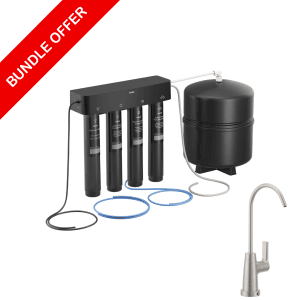
The Moen 4-Stage Reverse Osmosis Water Filtration System delivers certified PFAS filtration with remarkable efficiency. Installed conveniently beneath your kitchen sink, this RO system can reduce more than 95 percent of PFOA and PFOS in your drinking water based on your water quality. It can also remove arsenic, viruses, lead, mercury, chlorine, and more from your cold water and improve its taste, odor, and clarity. The result is cleaner, healthier, higher-purity drinking water straight from your tap, with minimal waste.
Learn how reverse osmosis works and how to DIY install a reverse osmosis system.
Whole-House PFAS Filtration
SpringWell’s PFAS Removal System is designed to remove “forever chemicals” from every drop of water supplied to your home. It reduces long- and short-tail PFAS, such as PFOA, PFOS, and GenX, to nondetect levels, delivering cleaner, safer filtered water to every tap, shower, and water-using appliance. Its ATOMUS PF8 media has a 25 times larger absorption capacity than typical carbon or ion-exchange filters and doesn’t require frequent backwashing or maintenance. Each cartridge treats up to 350,000 gallons before needing replacement and meets NSF/ANSI 53 certification requirements for proven PFAS reduction.
Final Thoughts
The launch of EPA’s PFAS OUT initiative is a meaningful step toward addressing widespread PFAS contamination in community water systems. While progress will likely be gradual, the program signals increased federal attention and support for removing PFAS from drinking water systems nationwide. Still, residents don’t have to wait for utilities to act. They can proactively protect their families now by having their water professionally tested and installing a certified PFAS water treatment system in their homes.
If you need help choosing the best PFAS water filter, don’t hesitate to contact SpringWell at 800-589-5592 or via the live chat feature on our website. Our water experts will answer your questions and provide the guidance you need to make a more informed and confident buying decision.