The Threat of PFAS Pesticides and How to Protect Your Drinking Water
Pesticides have long been considered a human health hazard, and the increasingly added “forever chemicals” are upholding that reputation. Known scientifically as PFAS, or per- and polyfluoroalkyl substances, these fluorinated ingredients reportedly help pesticides remain effective for longer. However, scientists and advocates warn that the use of such products could further contaminate the nation’s drinking water sources and endanger public health.
This article examines the possible health impacts of PFAS in pesticides, the contamination risk to tap water, and steps you can take to remove them from your home’s water supply.
What are PFAS Pesticides?
According to the Environmental Protection Agency (EPA), pesticides are substances or mixtures of substances intended for destroying, repelling, or mitigating pests, such as insects, fungi, and weeds, as well as controlling plant diseases. PFAS pesticides refer to types containing “forever chemicals.” In these formulations, PFAS act as active ingredients to destroy or suppress the target organism, or as inert ingredients to enhance the pesticide’s performance, the Environmental Working Group (EWG) explains.
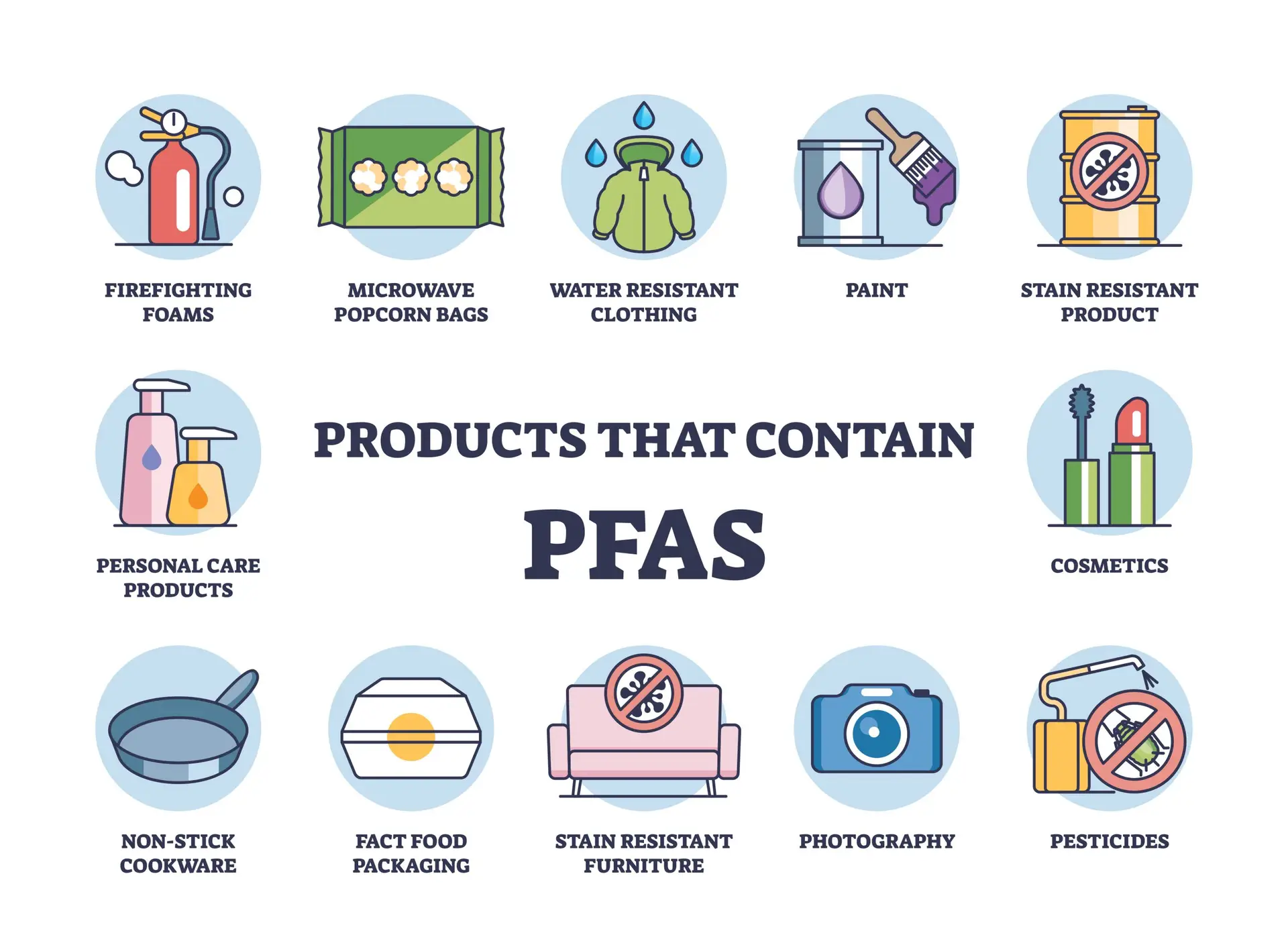
PFAS stands for per- and polyfluoroalkyl substances, a large family of human-made chemicals used in products and industries to repel stains, oil, grease, water, and heat. They are formed by combining carbon and fluorine atoms in a process called fluorination. The carbon-fluorine bonds are so strong and stable that PFAS don’t readily break down in the environment, hence the nickname “forever chemicals.”
Fluorinated pesticides, or pesticides with added PFAS, first appeared on the market in the 1930s, but it wasn’t until the past decade that they became widely used. Today, these chemicals are applied to staple food crops, including corn, wheat, kale, spinach, apples, and strawberries. They are also used on non-agricultural landscapes, such as lawns, golf courses, and in residential areas for flea treatments for pets and insect-killing sprays.
Why are PFAS Added to Pesticides Despite Environmental and Health Concerns?
Dozens of suspected “forever chemical” active ingredients have been approved for use in US pesticides. And many of these fluorinated pesticides are sprayed on millions of acres each year. Given their persistence and associated health risks, it is reasonable to question why they remain legal for such applications.
The EPA, which regulates pesticides at the federal level, argues that approved pesticide active ingredients like isocycloseram and cyclobutrifulam aren’t technically PFAS. Its current PFAS definition excludes chemicals with a single fluorinated carbon atom. Such compounds supposedly lack the persistence and bioaccumulative properties commonly associated with conventional PFAS. The agency further states that its “rigorous evaluation processes” found no human health risks of concern when these authorized pesticides are used according to their approved labels. It also adds that the chemicals provide farmers with additional options to combat devastating pests and diseases, thereby helping to bolster the country’s food security.
How PFAS in Pesticides Can Contaminate Drinking Water
“Forever chemicals” in pesticides don’t just magically disappear after doing their job. Once applied to crops and plants, they can travel far and wide and potentially contaminate water sources. In fact, a study revealed that twelve of 13 approved PFAS active ingredients monitored in the US have been found in the nation’s streams and rivers, with some detected at high concentrations throughout the country.
PFAS in pesticides can slowly leach underground during irrigation, rainfall, or other precipitation into groundwater. This is concerning because groundwater supplies roughly half of the country’s drinking water, especially in rural communities. Runoff may also carry PFAS to surrounding surface water sources, such as reservoirs, lakes, streams, and rivers, from which many municipalities obtain “raw water” for treatment.
Due to the high cost and complexity of large-scale PFAS water treatment, only a small fraction of US water facilities have the technology to eliminate “forever chemicals.” As a result, the substances can bypass treatment and contaminate the drinking water distributed to many communities, particularly those situated near treated fields. That may be part of the reason why nearly every American has detectable levels of PFAS in their blood.
Related articles: How Do Cities Treat Drinking Water? | How Water Gets To Your Home
Health Risks of “Forever Chemicals” in Pesticides
Despite their purported benefits, the addition of PFAS in pesticides has raised alarm about their potential health harms. Although the EPA claims there are “no human health risks of concern” when the chemicals are used as instructed, some opponents counter, saying that the pesticides contain notoriously toxic “forever chemicals.”
There is still much to learn about the adverse outcomes of PFAS exposure, but a growing body of scientific research has associated it with numerous human health harms, including:
- prostate, kidney, and testicular cancers
- reproductive and developmental issues
- higher cholesterol
- ulcerative colitis
- compromised immune response in children (including decreased responsiveness to vaccines)
Other PFAS-related ailments include liver and kidney disease, decreased fertility, and pregnancy-induced hypertension. Even more troubling, research shows that PFAS in pregnant women’s drinking water puts their babies at a substantially higher risk of low birth weight, preterm birth, and infant mortality.
How to Find Out If Your Drinking Water Contains PFAS
If you are concerned about “forever chemicals” in your water supply, there are ways to find out if they are present. For households on public water systems, review your annual Consumer Confidence Report (CCR) for a general overview of your water quality. This report lists all the contaminants detected and whether they exceed EPA limits. You can access it on your local utility’s website or through the EPA’s CCR search tool (read our guide on how to read your water quality report). Bear in mind, however, that CCRs only reflect the water’s quality as it leaves the treatment plant. What reaches your home may have different contamination levels.
If you have a private well, it is recommended that you test your water at least once a year for PFAS and other potentially harmful contaminants. You can’t see, smell, or taste many of these pollutants, so short of a thorough and accurate water test, there’s no way to tell what, if any, toxins you’re ingesting in your water. Mail-in test kits allow you to collect a water sample and send it to a certified lab for detailed analysis. This way, you can know exactly what’s in your water and identify the best treatment solutions.
Discover 10 common problems a water test can detect in tap water.
How to Remove PFAS From Drinking Water
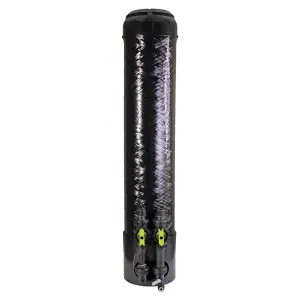
If your water test or report indicates the presence of PFAS in your water supply, or if you want to prevent future contamination, it is worth investing in a PFAS-removing system for your home. SpringWell’s Whole-Home PFAS Water Filter System reduces harmful PFAS in drinking water to nondetect levels of less than 1 part per trillion (ppt). This is at least four times lower than the EPA’s requirement for infamous “forever chemicals” like PFOA and PFOS (4 ppt) and ten times below that for other common PFAS (10 ppt). The result is cleaner, safer water flowing from every outlet, and not just your kitchen faucet.
Designed for homes with 1 to 5 bathrooms, the system uses TOMUS PF8 media with 25 times higher absorption capacity than typical carbon or ion-exchange filters. Better yet, it doesn’t require frequent backwashing or messy maintenance. Each cartridge treats up to 350,000 gallons before needing replacement and is certified to NSF/ANSI 53, 61, and 372 for proven contaminant reduction and material safety.
Key Takeaways on PFAS in Pesticides
PFAS in pesticides are an increasingly prevalent issue, but there are steps you can take to prevent them from contaminating your water supply. For starters, review your water quality report and test your water to determine if they are present. Then, consider investing in a certified whole-home PFAS water filter to ensure every drop of water entering your home is safe, clean, and free from harmful “forever chemicals.”
To learn more about our PFAS water treatment system or for general inquiries, please contact SpringWell today at 800-589-5592 or message us directly.